Watching Movies as a Family and Its Effects on Children
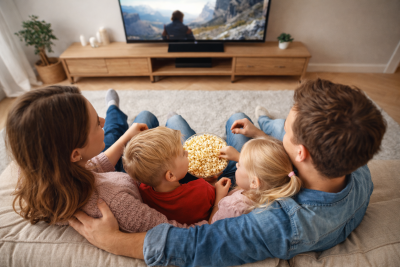
Big Impressions from Small Moments
In today's world, as time flows quickly, the value of moments spent together as a family increases every day. Living in the same house does not necessarily mean sharing the same life. The real bond is established in moments that are felt, shared, and given meaning together. Watching movies as a family is one of the simplest yet most effective ways to create these meaningful moments. Often seen merely as entertainment, this activity actually leaves deep and lasting effects on children's development.
For a child, sitting down with the family to watch a movie is not just spending time in front of a screen. It is a special time when they feel the sense of "being together." Laughing at the same scene, getting excited together, or feeling sad for a character allows the child to feel a sense of belonging. This feeling is one of the cornerstones of children's emotional development. A child who feels safe grows up to be more confident, open, and happier individuals.
Movies are a powerful tool for children to make sense of the world. Children learn to recognize different emotions through the characters they watch. When a character is scared, they understand what fear is; when another shows courage, they grasp what it means to be strong. This process develops the child's ability to empathize. Children who can understand the emotions of others are more successful in social relationships and build healthier connections with their environment.
At the same time, watching movies contributes to the child's mental development. Following the plot, understanding the relationships between characters, and seeing how the story unfolds enhance the child's attention, focus, and analytical skills. Hearing new words and encountering different forms of expression support language development. Especially the conversations held after the movie make this process much more valuable. Simple questions directed at the child allow them to think, comment, and express themselves.
Movies also play an important role in values education. Concepts such as sharing, helping, being patient, and choosing what is right take a more permanent place in children's minds through stories. Watching the choices made by a character helps the child evaluate their own behavior. This contributes to the development of an internal understanding of right and wrong.
However, the important point here is that the movie-watching process should be managed consciously. Choosing age-appropriate content, maintaining a balanced viewing time, and most importantly, doing this activity together with the family makes a significant difference. Because what is truly valuable for children is not the movie they watched, but who they shared that moment with.
When watching movies as a family becomes a habit over time, its impact is even stronger. Small movie nights held on certain days become a ritual that is anticipated and reassuring for the child. These rituals reinforce the sense of order and belonging in children's lives. What will be remembered years later is not the name of that movie, but those warm, sincere moments spent together.
In conclusion, watching movies is not just entertainment for children; it is a multifaceted experience that supports emotional, social, and mental development. When done as a family, this effect multiplies. Because children learn not from what they see the most, but from what they feel. Giving them moments spent together is, in fact, giving them trust, love, and a strong bond.
Remember, children grow, time changes, life flows on...
But those small moments spent together leave the deepest and warmest impressions in their hearts.
Sometimes a movie is not just a movie; sometimes it is one of the most beautiful memories that touches a child's life.